
 ResultWhat you take away, what it costs, what happens next.
 FounderWho reviews every Map, and why a person.
 Fit Check7 questions. Find out if your workflow fits.
ROOM 02 · WHAT YOU TAKE AWAY
A clear decision before you change anything.
- Your real workflow, reconstructed from evidence
- Conflicts and unknowns, in plain sight
- Clear boundaries between people and automation
- A verdict and acceptance criteria
Any verdict is valid, if the evidence supports it.
EUR 490 one workflow · reviewed by a person · implementation separate
QUESTIONS
Worth knowing first.
When does it make sense?
A real change is at stake — hiring, software, automation, AI, or redesign — and implementing the wrong description would cost more than checking reality first.
When not?
The workflow is already obvious, low-risk, and sufficiently verifiable to implement directly.
What exactly do I get?
- The current workflow, in a defensible version
- The relevant sources and evidence
- Conflicts and unknowns, in plain view
- The material decision points
- Responsible people and systems, where known
- Explicit boundaries between human work and automation
- The exceptions that matter
- Accepted-result criteria
- A final verdict
- One bounded next step
What do I need to start?
You do not need perfect documentation. A recent real case, the materials that moved through it, and a short explanation of the intended result are normally enough to begin. We do not ask for admin access by default.
What happens next?
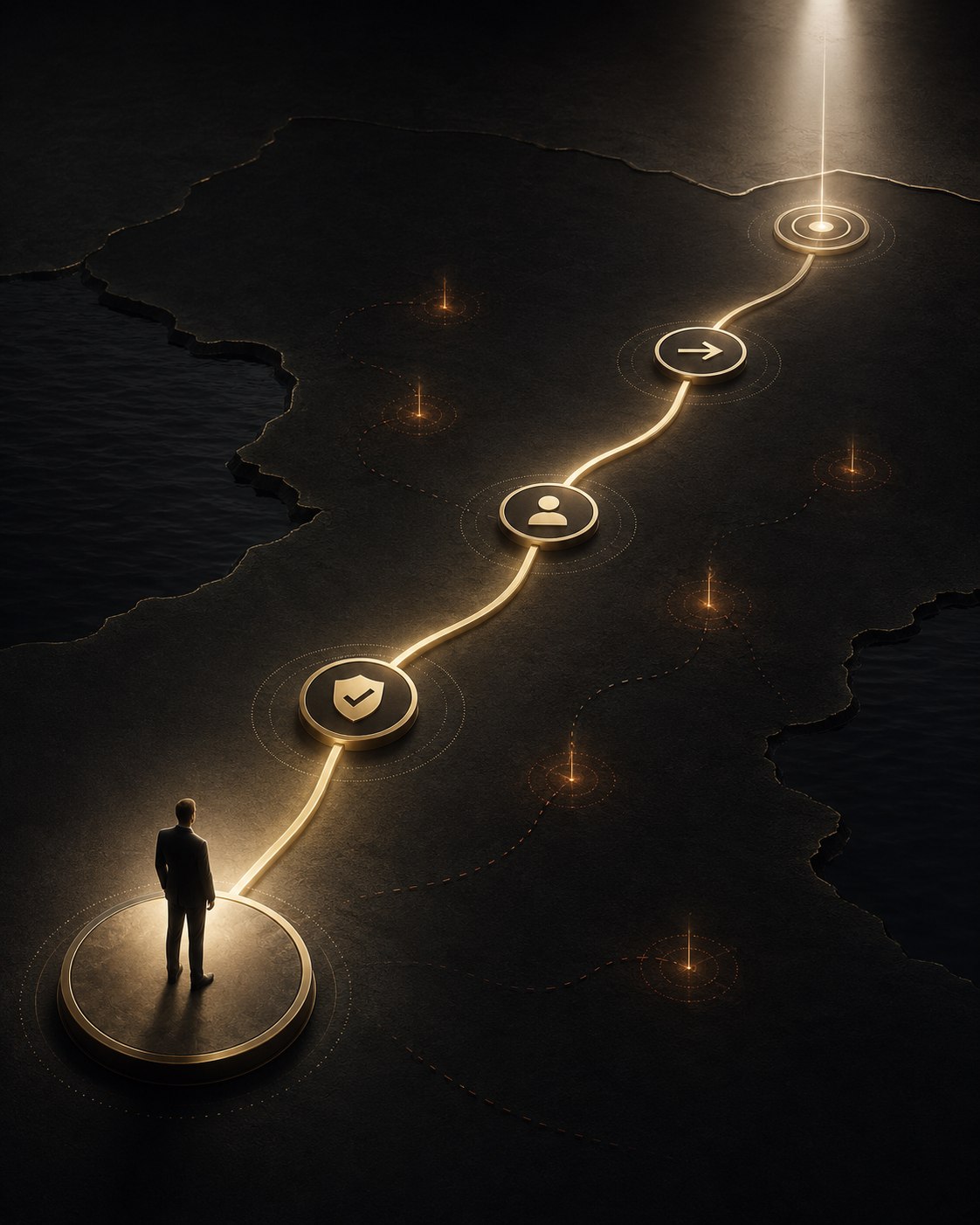
Fit Check → human fit review → written scope → EUR 490 → evidence → Protocol Map → optional separately scoped implementation.
Implementation is not included. After the Map you can do nothing, do it yourself, hand it to your team or another provider, or ask us for a separate implementation scope.
Delivery timing is set in the written scope.
Why does a person review every Map?
Evidence can be incomplete or contradictory. Human review exists to take responsibility for material judgement, not to pretend that an automatic score knows more than it does.